
International campaigns rarely miss their launch dates because of the creative work. They miss them because of everything around it, and that is where multilingual content delivery slows down.
Files in the wrong place. Briefs missing context. Tools that do not connect. Approval rounds that disappear into email chains. For localisation managers and content ops teams, these are not edge cases. They are the everyday reality of managing multilingual content delivery at scale.
The good news is that most of these delays are fixable. Not by working faster, but by removing the operational friction that slows the process down in the first place.
See how Adaptria helps teams launch international campaigns faster → Book a demo
Why multilingual content delivery takes longer than it should
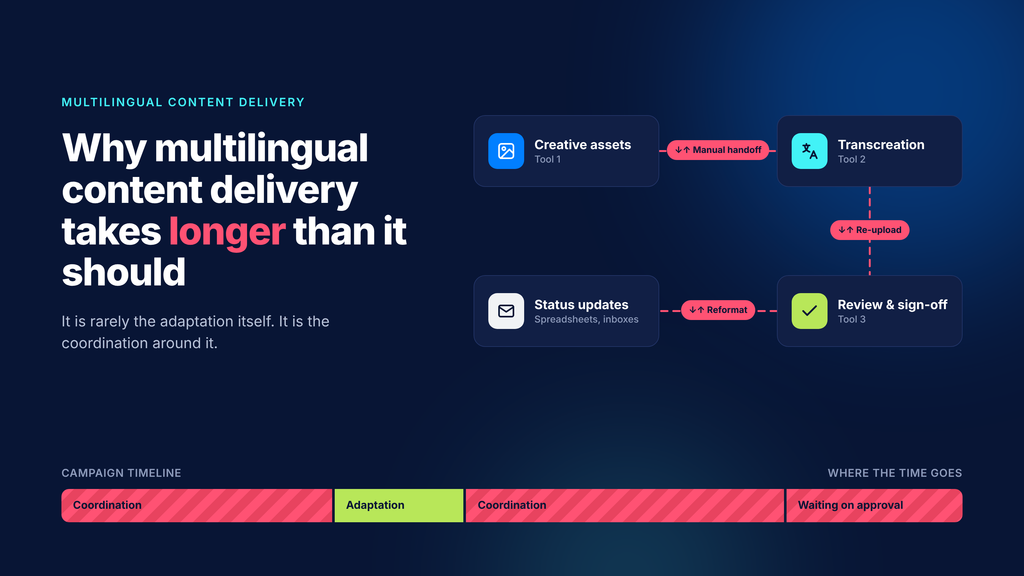
Ask any localisation manager where time actually gets lost on an international campaign, and the answers tend to be consistent. It is rarely the adaptation itself. It is the coordination around it. If you want the wider market picture, the annual Nimdzi 100 report is a useful benchmark for how the language services industry is changing.
Disconnected tools create manual bottlenecks
Most content ops teams are working across a combination of platforms that were never designed to talk to each other. Creative assets live in one system. Translation happens in another. Review and approval sit in a third. Project status lives in a spreadsheet or, worse, in someone’s inbox.
As a result, every handoff between stages requires a person to download, reformat and re-upload content manually. That process takes time. It introduces errors. And it means that nobody ever has a complete, real-time picture of where the campaign actually stands.
Incomplete briefs slow down adaptation
When localisation teams receive a brief without the visual assets, layout context or creative rationale behind it, they are working blind. Transcreators cannot make the right creative decisions without understanding the intent. Linguists cannot adapt copy correctly without seeing how it sits in the design.
The output suffers. Revision rounds follow. Each round adds days to a timeline that was already tight.
Version control breaks down across markets
At scale, version control becomes one of the most time-consuming challenges in multilingual content delivery. Different markets working from different source files. Updated assets that did not reach all teams. Approved copy that got overwritten somewhere in the chain. Without a central source of truth, localisation managers spend a significant portion of their time resolving version conflicts rather than moving work forward.
How to speed up multilingual content delivery: four operational fixes
1. Connect your tools rather than working around them
The fastest fix for manual handoff bottlenecks is not buying new software. It is making your existing tools communicate. API integrations that allow platforms like Adobe Workfront, Phrase, Crowdin and your DAM to pass content between each other automatically remove the need for manual file management at every stage.
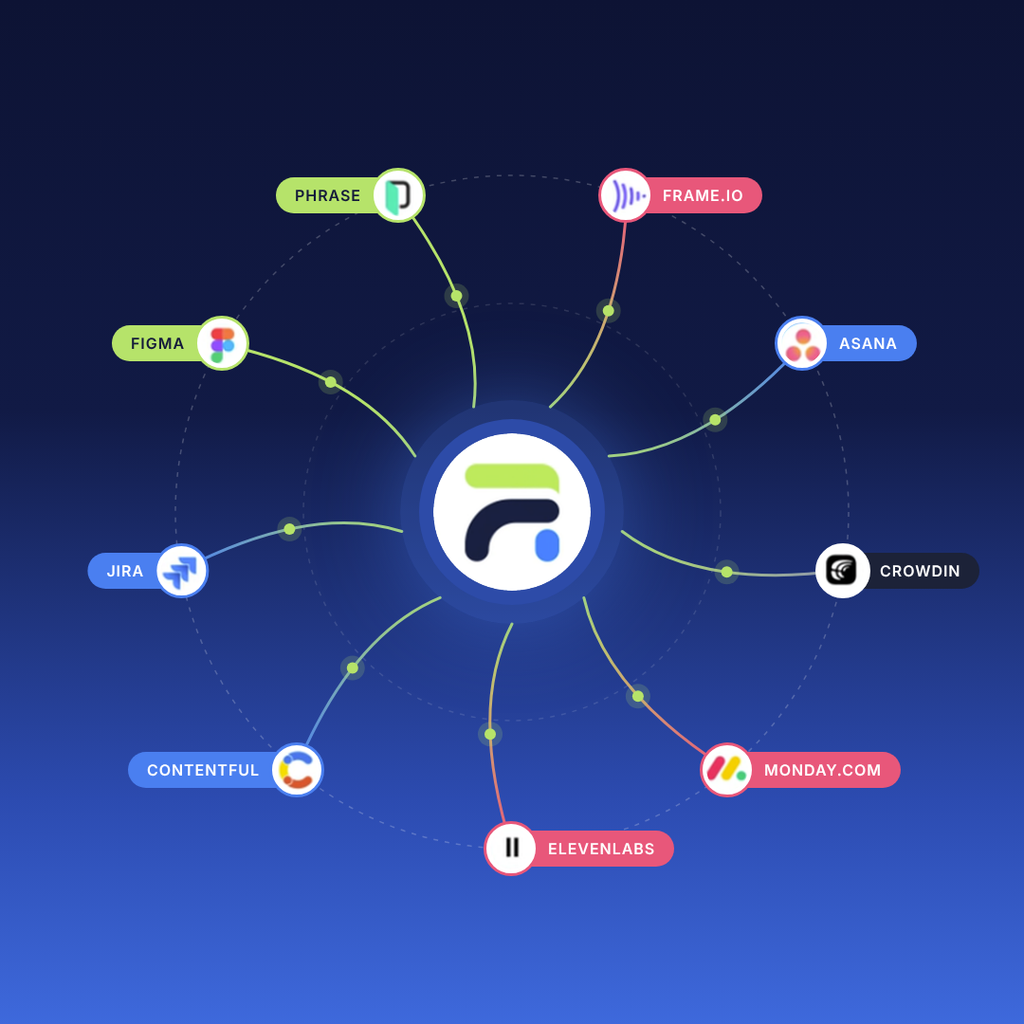
Furthermore, connected tools mean that status updates, approvals and deliverables move through the workflow without anyone having to chase them. That alone removes a significant source of delay from most multilingual content delivery pipelines.
2. Centralise briefing from the start
Every international campaign should start from one central brief, not an email, not a shared document that people update inconsistently, but a single source of truth that carries source assets, creative context, market requirements and brand guidelines in one place.
When adaptation teams, whether internal or external, receive a complete brief with full visual context, the quality of the first output improves significantly. Consequently, revision rounds shorten and timelines compress.
3. Build reusable workflows for recurring content types
Not every campaign brief needs to be managed as if it is new. High-volume, recurring content types, such as product descriptions, social assets and digital advertising, follow predictable adaptation paths. Building reusable workflows around those content types means the process does not need to be rebuilt each time.
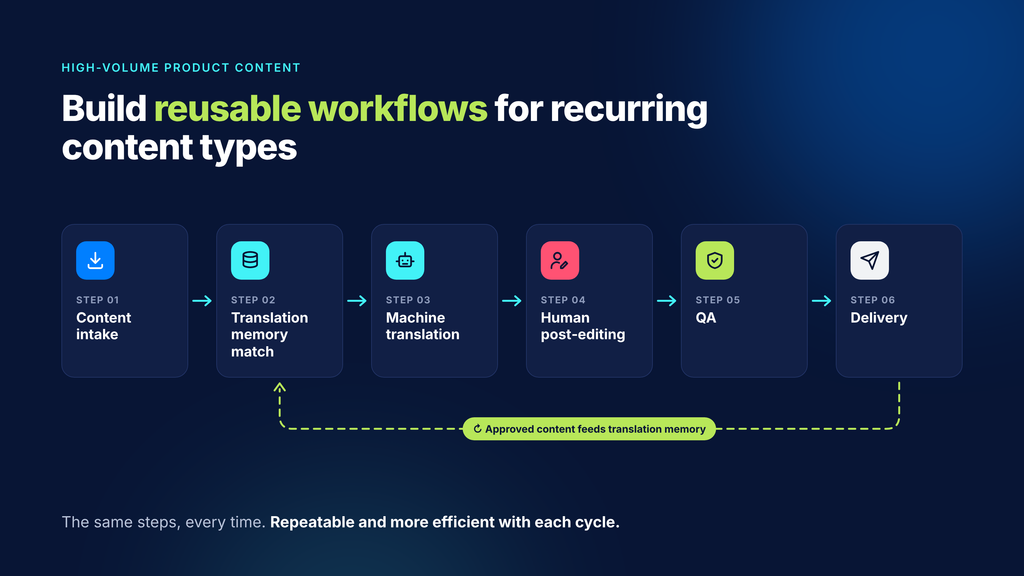
In addition, reusable workflows create consistency across markets. Everyone follows the same process, which reduces the variation in output quality that often triggers extra revision rounds.
4. Make progress visible to everyone in the chain
One of the most consistent time drains in multilingual content delivery is status chasing. Localisation managers following up with vendors. Campaign managers asking for updates. Market leads waiting to hear whether their assets are ready.
When workflow status is visible in real time across every stage, every market and every asset, that chasing stops. Teams spend less time asking where things are and more time moving them forward.
Ready to compare localisation platforms?
If you are already thinking about which tools could help fix these problems, our roundup covers the leading enterprise localisation management software available in 2026, including how they compare on workflow connectivity, multimedia support and financial reporting.
See the best localisation management software for enterprise teams →
How Adaptria supports faster multilingual content delivery
Adaptria is built specifically for the operational complexity that slows multilingual content delivery down. As a workflow orchestration platform, it connects your existing tools, centralises briefing and delivery, and gives everyone involved in an international campaign a single, real-time view of progress.
For localisation managers and content ops leads, that means:
- Connected workflows across your existing tech stack, with no manual downloading, uploading or reformatting between stages
- Centralised briefs that carry source assets, creative context and market requirements in one place, reducing revision rounds from the start
- Reusable workflow templates for recurring content types, so the process gets faster and more consistent over time
- Real-time visibility over every job, stage and deliverable across markets, languages and teams, without chasing updates
Adaptria targets a 70% increase in speed to market for teams managing multilingual content delivery at scale. Not by cutting corners on quality, but by removing the operational drag that inflates timelines in the first place.
The bottom line on multilingual content delivery
Slow multilingual content delivery is almost always an operational problem, not a creative one. The translation gets done. It is the workflow around it that pushes launch dates back. Disconnected tools, incomplete briefs, version conflicts and status chasing all add up.
Fixing those problems does not require a bigger team or a faster turnaround from your suppliers. Instead, it requires better infrastructure. Connected tools, centralised briefs, reusable workflows and full visibility over the process from brief to delivery.
Ultimately, that is exactly what Adaptria provides.
Ready to launch international campaigns faster? Book a demo at adaptria.com/demo →
Adaptria is the operating platform for global content adaptation, purpose-built for the complexity of multilingual marketing at scale.